

Jennifer Lawrence joined Instagram for the first time, and her first post was a video laying out ground rules for her fans and the general public. In that video, she says, “So, yeah, I’m giving it a shot. And if anyone says anything negative, I will quit. Immediately. No questions asked.” She went on to say that “If someone says something mean, I’ll know, and I’ll quit.” She also put an Instagram story saying, “Please be mindful that any mean or a**re**ive comments can negatively affect the baby. It’s me. I’m the baby.” Those posts show basically three traits of women, namely: Solipsism (Her feelings are her reality), narcissism, and EGO.

Solipsism (Her feelings are her reality)
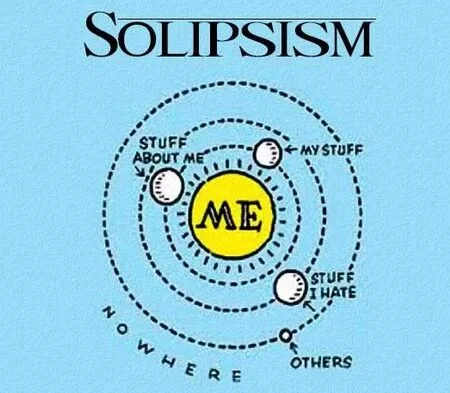
So, in the case of solipsism, the other person’s feelings are non-existent, but her feelings are her reality. According to her, the other person’s feelings are illusions created in their mind or are speculative and hypothetical. She thinks that the world(others) revolves around her.
Narcissism
Narcissists just want one thing from you that is your reaction. They seek a constant supply of attention and admiration. So, don’t feed them. This is referred to as narcissist supply, which also includes validation, reassurance, power, and control. Be ready to walk away from her at any time, or she will not understand your worth. If you walk away, she will come after you for the narcissist supply, like attention, admiration, validation, etc.
EGO
Ego=1/Knowledge
“More the knowledge lesser the Ego, lesser the knowledge more the Ego…”
These are a few of the reasons why female rulers waged war in the history of mankind, which is debunked below with proofs.
The Myth Of ‘War-Free’ Female Rulers
The rulers in the world history till date have been lauded or scrutinized for their leadership; the consequences or loopholes being evident and rightfully discussed by their successors and the common masses they ruled. The emergence and rise of female governance have a pivotal role in this history, as we have come a long way from having the first, Kubaba, as the queen of Sumer in 2,400 BC to notable women administrators in the 21st century. The dilemma to be addressed here is whether these females in power reflected the worshipped benevolence and absolute fairness of femininity, or unfortunately failed to set the standards of ideal non-vi*lent rule.
The male rulers, including the important post holders of the present day of different nations, are not condoned, as their foul history of propaganda, ri*ts, and instigations resulting in vi*lent consequences is checked and illuminated by the media and society; seemingly, some of the notable queens and women under similar criteria have been awarded a certain relaxation. One of them is Queen Victoria, the ruler of the United Kingdom of Great Britain and Ireland, whose significant and longest British monarch reign earned her the title of ‘Victoria the warrior queen’. She was most closely involved, emotionally and practically, with the two major wars of the period: the Crimean War of 1854–6 and the Indian Mutiny of 1857–9. The victory in the Crimean War was celebrated by brutal British lineage, which was a military conflict where Russia lost to an alliance of the Ottoman Empire, France, under the rulership of the United Kingdom and Piedmont-Sardinia. The series of fragmented battles and sieges caused huge loss of life and highlighted wider issues and failures pertaining to leadership, military intervention, mortality rates, medicine, and mismanagement. Discontent had long been simmering throughout India under British rule, which resulted in a mutiny by Sepoys led by Mangal Pandey, today marked as the “First War of Independence for India”. The aftermath was Bahadur Shah, the last of the Mughals, being arrested and tried for treason by a military commission assembled at Delhi, and exiled to Rangoon where he died in 1862, bringing the Mughal dynasty to an end. In 1877, Queen Victoria took the title of Empress of India on the advice of Prime Minister Benjamin Disraeli; to save and expand her dominance in the United Kingdom’s then-ens**ved nation, establishing her as just another tyrant.
The next to be discussed is the famous Iron Woman of India, the first and only female Prime Minister of India, Smt. Indira Gandhi; is ironically infamous for the decisions she took during her governance. A key player in the Indo-Pakistani War of 1971, resulting in the Simla Agreement, and the subsequent Delhi Agreement, gave Pakistan everything it wanted: the territory it lost to India in the war and the safe return of all its soldiers without one of them being held responsible for the genocidal campaign unleashed in what is now Bangladesh. Considered a dark phase in the history of India’s democracy, the National Emergency of 1975 was imposed, committing the suspension of fundamental rights guaranteed under the Constitution, state censorship on media, and a crackdown on civil liberties. In the same year, the Allahabad High Court held her guilty of electoral malpractices and barred her from holding any public office for six years. Such events lent her a questionable reputation as a female administrator. Another parallel case leads to the first woman Prime Minister of the United Kingdom, indeed the longest to hold that post, Margaret Thatcher. Similarly adorned with the title of ‘Iron Lady’, her uncompromising politics has also met with a fair share of criticism. While she could hardly be held directly responsible for the Argentinian invasion leading to Falklands War (1982), it was certainly the result of her style of rule and one-track approach to policy; marking loopholes in her governance.
Egyptian history’s celebrated empress who is highly prevalent in the modern culture and liberal arts is Queen Cleopatra VII Philopator, the last active ruler of her descent. The defeat in the War of Actium led to her committing suicide, bringing an end to a century of continuous civil wars in the Roman state. Her bravery and the reputation of being a ruthless queen were always praised; although two of her noted love affairs dawned upon her reign as considered a negative influence on the moral grounds of the civilization. The last empress of Russia, Catherine the Great, stands as a prominent figure of brutal rulership as she conducted the conquest of the south, making Russia the dominant power in south-eastern Europe as the nation then inflicted some of the heaviest defeats ever suffered by the Ottoman Empire, including the Battle of Chesma (1770) and the Battle of Kagul (1770). Other comparable cases of accomplished women include Isabel of Spain, the Catholic; former Sovereign of Austria, Marie Theresa, and Isabella I of Castile, respectively. All the above citations and contemplations narrow down to the deciding factor of the potential of leadership and sense of justice in an individual, irrespective of the sex; as both the genders offer ample examples of positive and destructive rulership. War has always been denoted as an ugly affair with grave inhuman consequences, whereas the greatness of a leader lies in ensuring peace.
Also Read: War and Men: History

I am Vivek Singh owner and publisher of newsofx.com. I am a journalist by profession. I did my Bachelor’s in Journalism and Mass Communication from Amity University Jharkhand and my Master’s in the same from Central University of Jharkhand grabbing the gold medal.
I am a Men’s Rights Activist, International Men’s Day and World Day of the Boy Child India coordinator, and Global Media coordinator for both of these days.
Discover more from NEWSOFX
Subscribe to get the latest posts sent to your email.